 Public
If you call in sick and say "I feel myself bad today," you will probably get some confused, and slightly concerned, looks. 👀
The mistake makes perfect sense as a direct translation. In Russian, "Я чувствую себя плохо," in German, "Ich fühle mich schlecht," in French, "Je me sens mal," and in Spanish, "Me siento mal," they all use a reflexive pronoun, so adding "myself" in English feels completely logical.
But my dear German, Slavic and Romance-language speakers, English doesn't work this way, and you will have to really retrain yourselves on this one. "Myself" does exist in English feelings, it just means something very different:
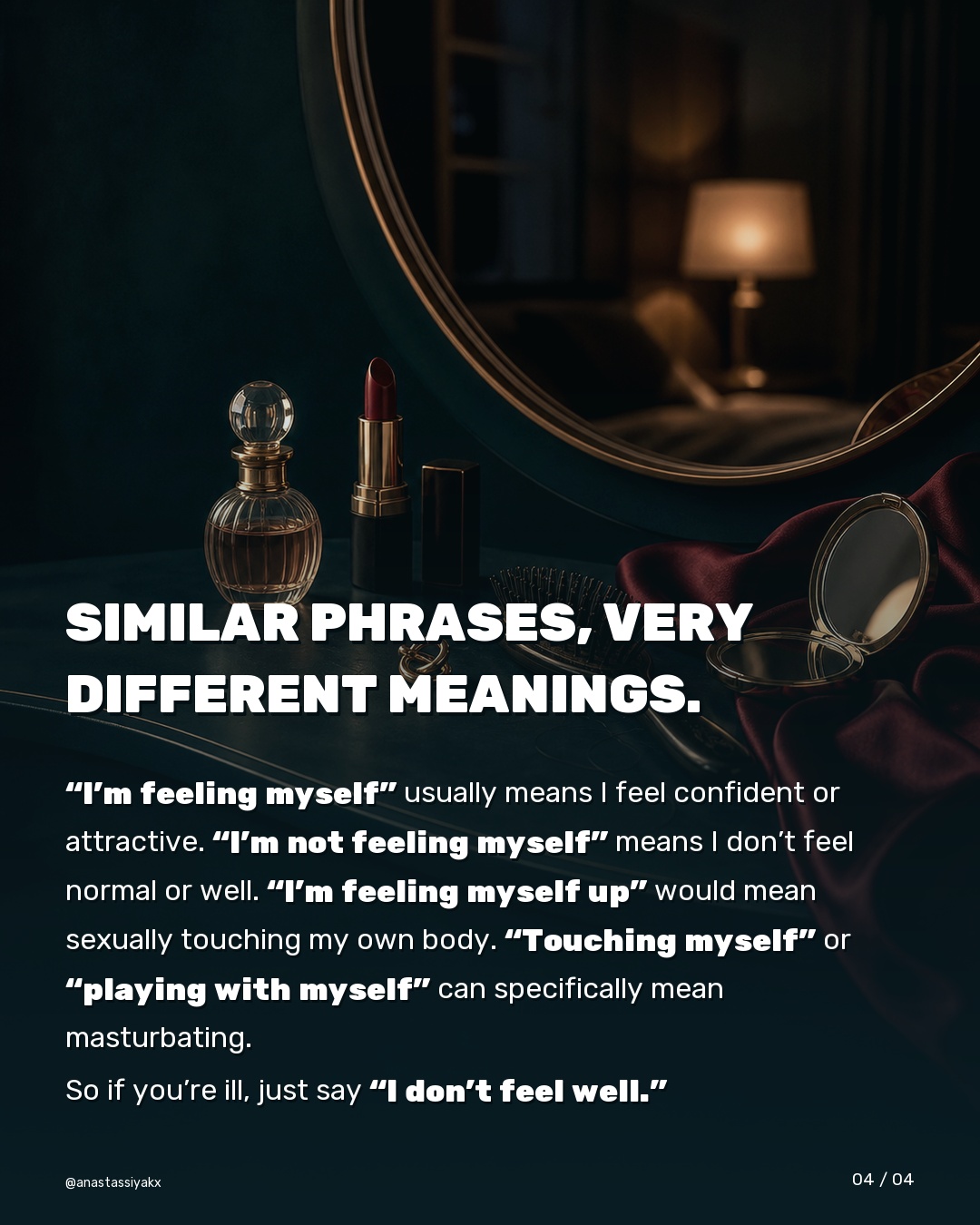
"I'm feeling myself" = I feel confident, attractive or stylish.
"I'm not feeling myself" = I feel a bit off, unwell or unlike my usual self.
"I'm feeling myself up" = I am touching my own body in a sexual way. 😬
"I feel bad" = I am unwell or I feel guilty; the context decides.
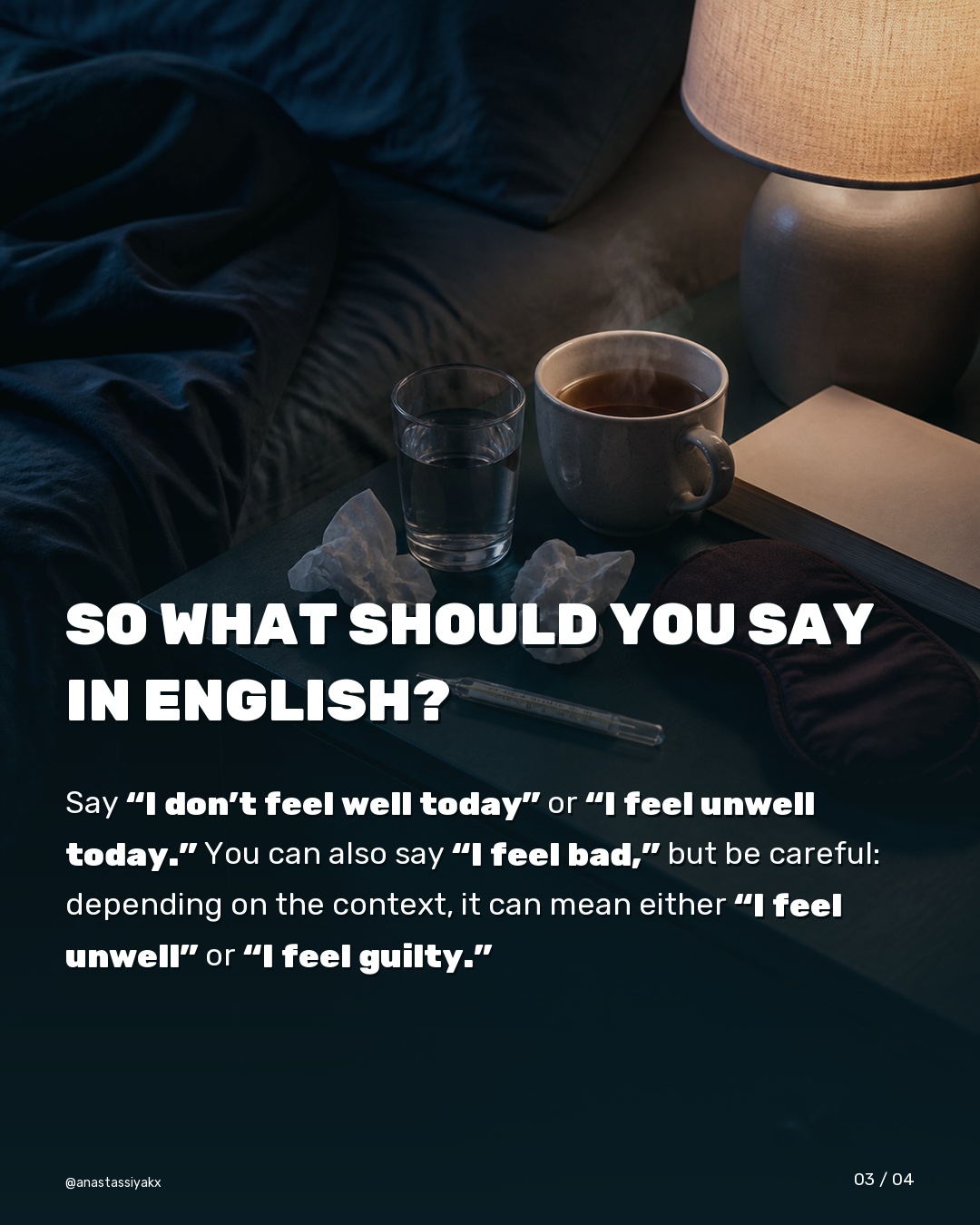
So if you have a fever, a cold or simply need a day off, keep it simple: "I don't feel well today" or "I feel unwell."
Has a literal translation from your first language ever made an English sentence sound completely different?


0 views0 clicks0 engagements0 reach0s viewed0s average
Be the first to comment on this post.