Startups are Bleeding Cash. Here is Why Smart Invoicing & Cashflow Sync is the Cure.
Unpaid invoices and fragmented financial tracking kill startups. Learn how unifying your ledgers and automating payout methods stabilizes runway.
- Author: Michael Liang
- Published: Mar 10, 2026
- Reading time: 8 min read
Revenue does not protect a company if cash collection is slow, invoice status is unclear, and expenses are tracked in a different place from client billing. The back office has to show what is due, what is paid, and what runway is real.
Invoices Are Operational Signals
A good invoice system is more than a PDF generator. It should connect clients, products, recurring billing, bank accounts, payment proof, and transaction history. When those pieces are linked, finance can see risk before it becomes a cash crunch.
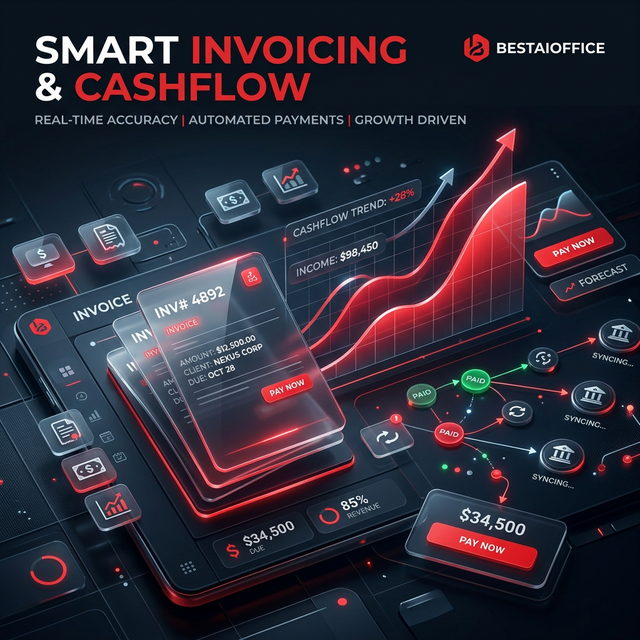
!Smart invoicing and cashflow dashboard
The Three Leaks to Close
Most startups lose clarity in three places: invoices that sit unpaid without reminders, recurring services that are billed inconsistently, and expenses that cannot be reconciled against the right client or project. Smart invoicing closes those gaps with status, history, and linked records.
Recurring billing
Profiles keep monthly retainers and repeat invoices from slipping.
Payment proof
Receipts, notes, and transaction links make reconciliation faster.
Cash visibility
Bank and ledger views show what runway actually looks like.
One System, Fewer Surprises
The finance module in Best AI CEO operations keeps invoices, entities, products, ledgers, recurring profiles, and transaction records in one place. That reduces the spreadsheet drift that turns finance into detective work.
The Takeaway
Cashflow is not just a finance problem. It is an operating system problem. Put invoicing, clients, transactions, and ledgers on the same rail, and founders get the one thing they need most: fewer surprises.