AI Marketing Automation for Startups: A Lean Growth System
Learn how startup teams can connect customer insight, content, campaigns, follow-up, and analytics in one lean, governed AI marketing automation system.
- Author: Sarah Chen
- Published: Jul 23, 2026
- Reading time: 13 min read
AI marketing automation for startups should create operating leverage before it creates volume. A lean team needs a system that can turn customer evidence into useful content, focused campaigns, timely follow-up, and a clear next decision without forcing the founder to coordinate a growing collection of disconnected tools.
That does not mean putting every channel on autopilot. Early-stage marketing changes quickly: the ideal customer sharpens, the offer evolves, objections surface, and a promising message can fail when it reaches the wrong audience. The best automation keeps those changes connected while leaving people responsible for positioning, product claims, customer communication, budget, and judgment.
This guide is for founders, startup operators, and small growth teams evaluating AI marketing automation software. It explains what to connect first, which decisions should remain human, how to build a practical 30-day pilot, and how to compare a collection of point tools with a broader AI operating system.
What is AI marketing automation for startups?
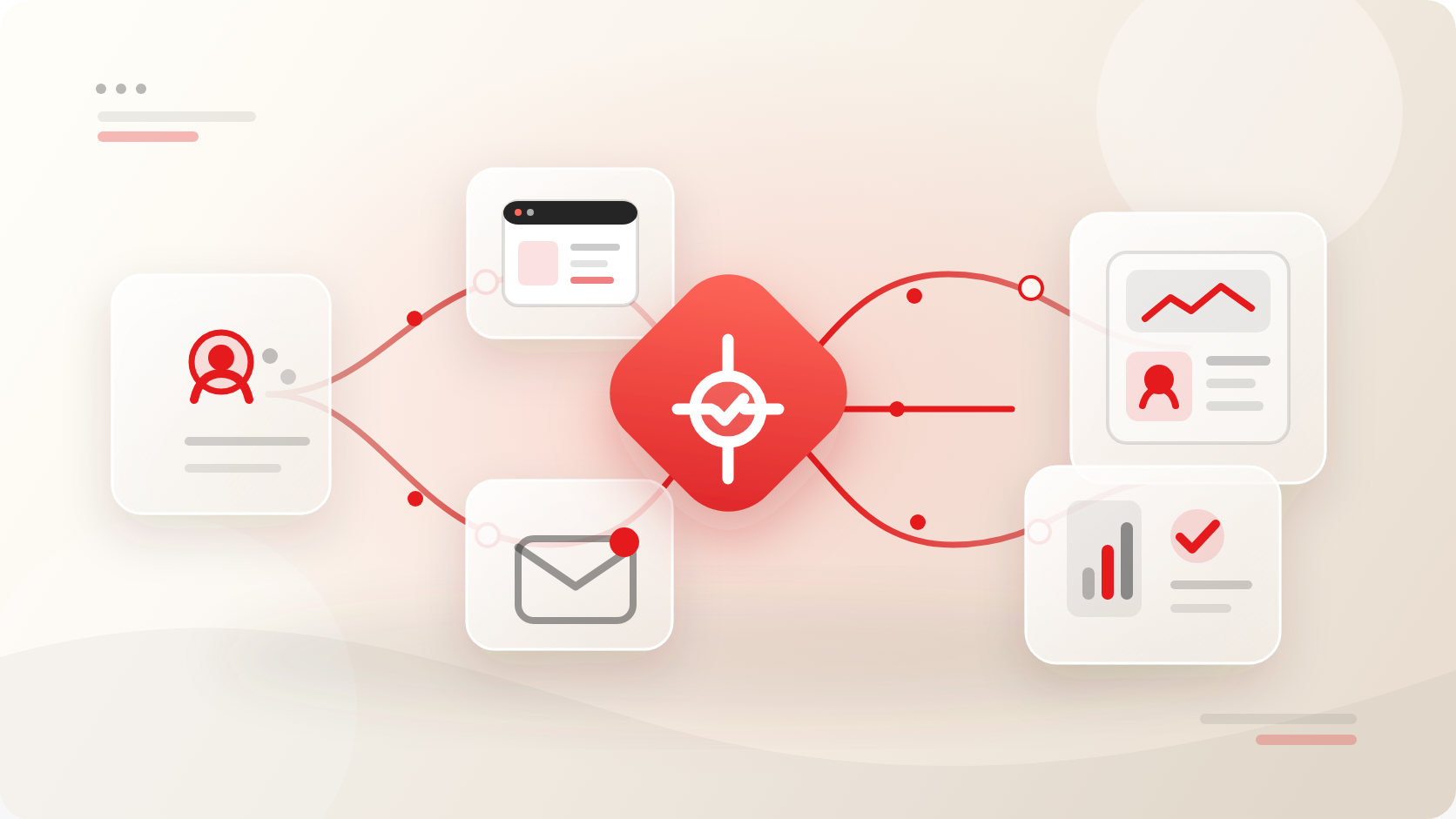
AI marketing automation for startups combines approved company context, generative AI, workflow rules, channel tools, and human review. It can help a team research a market question, prepare a campaign brief, draft channel-specific assets, route them for approval, trigger appropriate follow-up, and summarize what happened.
Traditional marketing automation is mostly deterministic: when an event occurs, the system performs a defined action. AI adds interpretation and creation. It can organize interview notes into themes, draft a landing page from approved product facts, adapt a message for different channels, or prepare a weekly decision memo. The underlying triggers, permissions, and escalation rules still need to be explicit.
A lean system needs four connected layers
- **Truth:** the customer, problem, product, proof, offer, brand, and claims the startup has approved.
- **Workflow:** how an insight becomes a brief, asset, approval, launch, follow-up, and learning.
- **Execution:** the website, SEO, email, social, ads, CRM, and analytics actions that move work forward.
- **Governance:** the owners, permissions, quality checks, consent rules, budgets, and escalation points that keep automation safe.
Best AI CEO is built around this connected model. Strategy, brand context, websites, SEO content, email, social, ads, analytics, CRM, and operating work can share the same company inputs instead of rebuilding context in a different app for every task.
Start with the startup constraint, not the channel
A startup rarely needs more activity everywhere. It usually needs to resolve one constraint: unclear positioning, weak discovery, poor conversion, slow follow-up, inconsistent campaign production, or reporting that does not explain what to do next. Automating around the wrong constraint makes the team faster at work that does not matter.
Good first automation candidates
- A repeated workflow with a visible owner and stable input.
- A handoff that routinely delays campaigns or follow-up.
- A task where quality can be checked before the output goes live.
- A process with a measurable operating or customer outcome.
- A narrow journey the team can supervise end to end.
Poor first automation candidates
- A channel the startup has not connected to a real audience.
- Claims that change faster than the source material is reviewed.
- High-stakes messages with no clear escalation path.
- Large-scale content created mainly to occupy search results.
- Automatic budget changes before tracking is trustworthy.
Use the AI CEO strategy workflow to name the constraint, customer journey, owner, outcome, and guardrails before selecting tools. This small planning step prevents an attractive feature list from becoming an expensive operating model.
The seven startup workflows to connect first
1. Keep customer evidence and positioning together
Create one approved source for the priority customer, urgent job, current alternatives, language from interviews, product capabilities, proof, objections, pricing context, brand voice, and prohibited claims. Separate observed evidence from the team's hypotheses. Add an owner and revision date so downstream work does not rely on an old pitch deck.
The source should be compact enough to maintain and specific enough to guide a draft. Strong brand and business inputs help every channel use the same promise without pretending an untested assumption is a fact.
2. Turn buyer questions into useful search content
Prioritize questions that signal a real decision: who the product is for, how it works, what it replaces, implementation requirements, pricing logic, integrations, alternatives, and risks. AI can cluster questions, draft a structured brief, suggest internal links, and prepare a first version. A founder or subject-matter owner should add original judgment, product truth, and a clear point of view.
Google's current guidance on generative AI content says AI can support research and structure, while warning that scaled pages without added user value may violate spam policies. Use the AI SEO article workflow to strengthen a real editorial process, not to publish near-duplicate pages.
3. Build the campaign and destination from one brief
A startup often tests an ad, post, partnership, or founder-led message while sending every visitor to the same generic page. Instead, define the audience, problem, promise, proof, offer, objections, channel, destination, and success signal in one brief. Generate the campaign assets and landing page from that shared source.
The AI website builder can keep the destination aligned with the acquisition message. Before launch, a person should verify the product claims, CTA, mobile layout, accessibility, form routing, tracking, privacy language, and links.
4. Route leads and follow up by intent
Not every form completion deserves the same sequence. A waitlist signup, pricing question, content subscriber, product trial, partnership request, and sales-ready lead have different expectations. Define the signal, the next useful action, the allowed frequency, the owner, and the condition that stops automation or hands the conversation to a person.
The FTC's CAN-SPAM compliance guide explains that commercial email needs accurate sender information, a valid postal address, a clear opt-out method, and prompt handling of opt-out requests. The AI email marketing workflow can help create and coordinate messages, but the startup remains responsible for consent, suppression, accuracy, and applicable law in every market it serves.
5. Run small acquisition experiments with approval gates
Start with a small set of meaningful variations, each tied to a hypothesis. Label the audience, message, proof, creative, destination, budget, and decision rule. AI can draft variations and organize the test; a person should approve targeting, claims, creative rights, spend, and the interpretation of results.
Google Ads' guidance on generated images tells advertisers to review generated assets for accuracy, misleading content, policy compliance, and applicable law before publication. Apply the same rule to every AI-assisted channel. Use ads management to keep the brief, review, launch, and measurement connected.
6. Repurpose approved source material
Once a product explanation, founder note, customer interview, webinar, or article is approved, adapt it for the channels where the audience already spends time. Preserve the central evidence while changing the hook, length, format, and CTA for each context. Every derivative should point back to its source and inherit its review status.
Use social media management to organize those versions, approvals, and publishing dates. Avoid turning one weak idea into twenty weak assets. Repurposing creates leverage only when the source is worth repeating.
7. Turn reporting into a weekly decision
A startup dashboard is useful only when it changes a decision. Ask the system to prepare a short weekly memo: what changed, which customer or funnel signal matters, what evidence supports the interpretation, which data is missing, what should stop, and what the team will test next.
Connect reach and engagement to useful downstream signals such as qualified conversations, activation, retained usage, purchase intent, or sales learning. The right measure depends on the business model and stage. The analytics and reporting workflow should reduce time spent assembling numbers while making assumptions and uncertainty visible.
What should remain under human control?
Keep a named person accountable wherever an action changes customer trust, public claims, spend, permissions, or legal exposure. Automation can prepare the work; it should not hide ownership.
- **Positioning:** decide which customer and problem the startup will prioritize.
- **Claims and proof:** confirm that every promise matches the product and available evidence.
- **Customer communication:** review sensitive, high-value, unusual, or emotionally charged messages.
- **Audience and budget:** approve targeting, exclusions, spend limits, and major campaign changes.
- **Consent and data use:** define what information may be used, for which purpose, and for how long.
- **Learning:** distinguish a useful signal from noise and decide which assumption changes next.
A stage-based automation roadmap
The right system changes as the startup learns. Automate the stable part of the business while keeping uncertain decisions easy to revise.
Discovery and pre-launch
Automate research organization, interview summaries, brief templates, asset checklists, and follow-up reminders. Keep problem selection, audience definition, and product promises human-led.
Early traction
Connect high-intent content, focused landing pages, lead routing, supervised nurture, founder-led distribution, and weekly learning. Optimize for signal quality, not publishing volume.
Repeatable demand
Standardize reliable campaign briefs, segment rules, approval flows, channel handoffs, CRM updates, and reporting. Expand only the steps that have stable inputs and owners.
Scaling operations
Add permissions, versioning, auditability, spend controls, data retention, team ownership, and cross-functional workflows. Measure whether automation reduces coordination while preserving quality.
A 30-day startup implementation plan
Week 1: Map one journey
Choose a narrow path such as problem-aware visitor to waitlist, comparison-page visitor to qualified conversation, or trial signup to first meaningful action. Document the current steps, delays, repeated work, owners, tools, approval points, and customer signals. Select one outcome plus two or three operating measures.
Week 2: Build the approved context
Write the customer, problem, product facts, proof, objections, offer, brand voice, consent rules, prohibited claims, and escalation paths. Link source evidence and assign an owner. Remove anything the team cannot defend or maintain.
Week 3: Run one supervised campaign
Create a focused content or acquisition asset, its destination, follow-up, and reporting plan from the same brief. Review every output. Test mobile rendering, forms, links, analytics, suppression rules, routing, and handoffs before launch. Record recurring corrections as reusable guardrails.
Week 4: Review the system, not just the result
Compare time from signal to launch, revision rate, missed handoffs, response quality, useful customer actions, and the clarity of the final decision. Keep the step that became more reliable. Redesign or remove the step that merely produced more output.
How to choose AI marketing automation software for a startup
Test each platform with a real journey and the same source material. A polished demo can hide the work required to maintain context, permissions, integrations, and quality after setup. Score the complete operating loop:
- **Fast time to useful work:** Can a lean team launch a supervised workflow without a large implementation project?
- **Shared company context:** Can customer, product, proof, brand, and campaign rules guide every output?
- **Workflow coverage:** Does it connect planning, content, pages, email, social, ads, CRM, and reporting where needed?
- **Human approvals:** Can the team review consequential work before it publishes, sends, spends, or changes data?
- **Integration fit:** Can it work with the systems that hold customer, consent, product, and revenue information?
- **Traceability:** Can you see which source, instruction, version, and owner produced an asset or action?
- **Measurement:** Can activity be connected to the startup's current customer and business outcomes?
- **Economics:** Does it remove enough subscriptions, manual coordination, or specialist work to justify its total cost?
- **Exit path:** Can the startup export its content and data, replace an integration, and stop a workflow cleanly?
A point tool is often the right answer when one stable workflow is the clear bottleneck. A connected AI operating system becomes more useful when the constraint sits between strategy, creation, channels, reporting, CRM, and ownership. Compare the options in the Best AI CEO alternatives guide. Small operators may also find the small-business automation guide useful, while product-led teams can go deeper with the SaaS demand generation system.
A simple startup example
Imagine an early-stage company building scheduling software for field-service teams. Interviews suggest that owners lose time when urgent jobs arrive and dispatch changes live across messages, spreadsheets, and phone calls. The team records the pattern as evidence, approves the product capabilities that address it, and marks broader productivity claims as unproven.
The system prepares a problem-led article, a focused landing page, two founder posts, a small search campaign, a short email follow-up, and a weekly report from that same brief. A person reviews the claims, page, form, targeting, budget, and email rules. Conversations then reveal that schedule changes are important, but proof of customer notification matters more to the best-fit buyers. The next brief changes accordingly.
This is the practical promise of startup marketing automation: not guaranteed growth, but a shorter, more coherent path from customer evidence to a tested message and the next informed decision.
Build your lean growth system
Best AI CEO connects strategy, brand context, websites, SEO, email, social, ads, analytics, CRM, and operating workflows in one workspace. Start with one customer journey, keep approvals visible, and expand only what proves useful.
See how Best AI CEO supports founders and CEOs, review all platform features, browse more AI growth articles, or download Best AI CEO when you are ready to connect the workflow on your desktop.