AI Ad Generator for Small Business: A Practical Creative Testing System
Learn how to turn one approved offer into on-brand ad concepts, reviewable variations, landing-page alignment, and a testing loop your small team can manage.
- Author: Sarah Chen
- Published: Jul 20, 2026
- Reading time: 12 min read
An AI ad generator for small business should do more than produce a stack of attractive images and headlines. The useful version turns an approved offer into a controlled set of creative variations, keeps every claim grounded in the business, sends traffic to a matching page, and helps the owner learn what to test next.
That workflow matters because advertising is a system, not a single asset. A strong visual cannot rescue a vague offer. Ten headline variations are not useful if they change the promise. And faster production only creates more waste when nobody knows which audience, message, or format each ad is meant to test.
This guide explains how to use AI for ad creation without giving up brand control, budget discipline, or human judgment. It is written for founders, small-business owners, and lean marketing teams evaluating whether an AI ad generator can replace fragmented creative work with a repeatable operating process.
What is an AI ad generator?
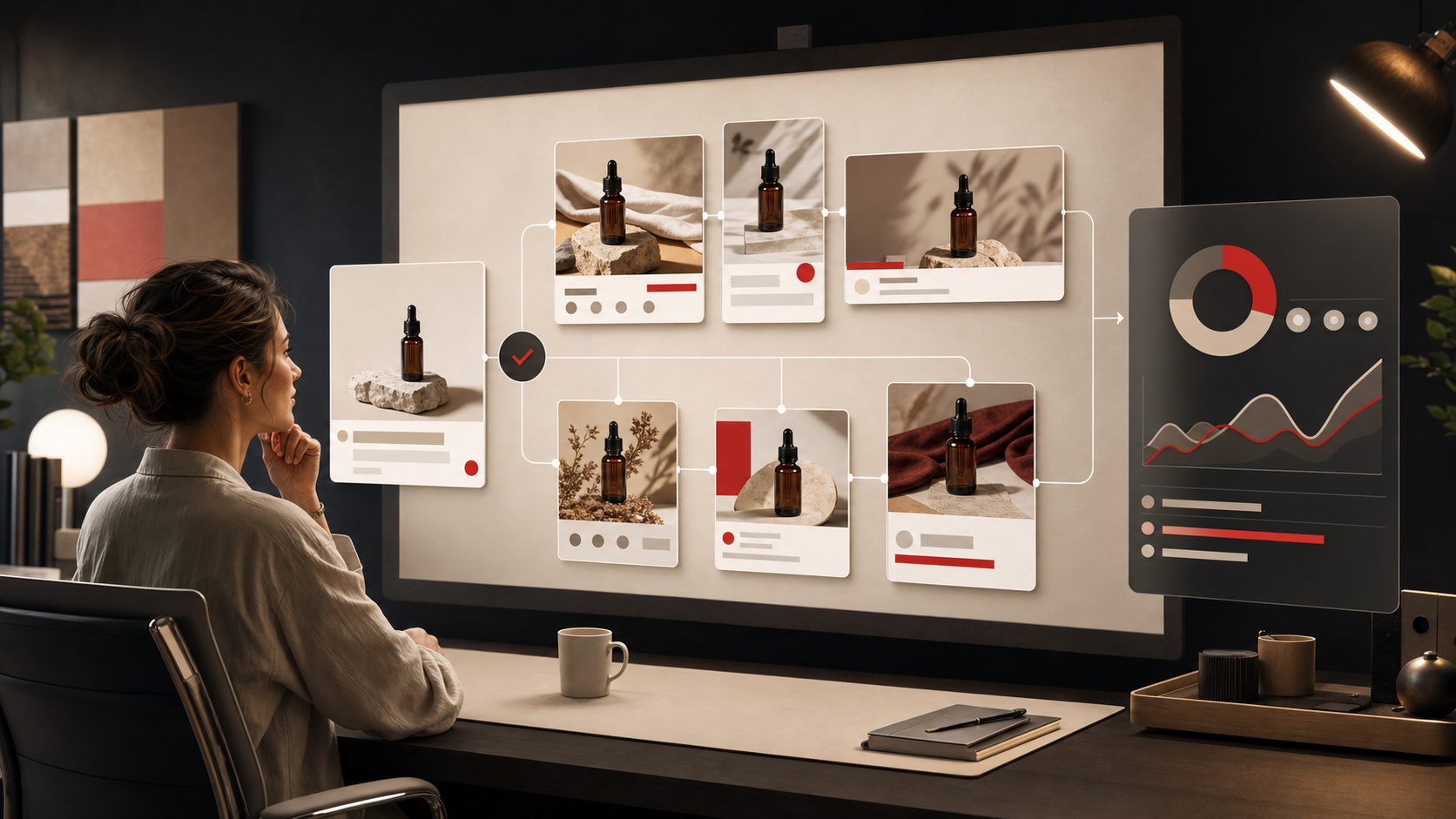
An AI ad generator uses business inputs and generative AI to help create advertising assets such as campaign angles, headlines, primary text, calls to action, image concepts, creative briefs, placement variations, and landing-page copy. The best systems also keep the work organized so a person can review, approve, publish, and compare it.
Major advertising platforms now include generative tools for text, images, backgrounds, resizing, and placement adaptation. That makes asset production easier, but it does not remove the advertiser's responsibility. Generated ads still need to be accurate, lawful, on-brand, relevant to the destination page, and compliant with the policy of every channel where they run.
The practical definition
A useful AI ad generator converts **one approved source brief** into a **small, labeled set of testable creative variations**. It does not invent the offer, customer proof, product capability, price, or expected result.
Best AI CEO connects ad creation with brand inputs, campaign planning, websites, analytics, and business operations. That shared context is what turns generation into a manageable workflow instead of another disconnected content tool.
What should an AI ad generator create?
Start with the parts of creative production that benefit from structured variation. Ask the system to create options within approved boundaries, then let a person decide which ideas deserve budget.
Good generation tasks
- Audience-specific hooks based on known problems.
- Headline and primary-text variations.
- Product, lifestyle, and demonstration concepts.
- Square, portrait, and landscape creative briefs.
- Calls to action matched to buying readiness.
- Landing-page sections that continue the message.
Keep under human control
- Prices, discounts, deadlines, and guarantees.
- Testimonials, reviews, and performance claims.
- Use of customer data or sensitive attributes.
- Regulated, health, financial, or legal language.
- Final budget, targeting, and publishing decisions.
- Approval of product accuracy and image rights.
If you need a focused workspace for those creation and review steps, explore AI ads management. If your ads are one part of a larger campaign, the small-business marketing automation guide shows how to connect them with email, social, SEO, and reporting.
The six-step AI ad creation workflow
1. Define the business outcome before the creative
Choose one campaign objective and one meaningful conversion. A local service company might optimize for qualified booking requests. An ecommerce shop might optimize for purchases from a specific product page. A SaaS company might optimize for trial starts from a defined audience. Avoid asking one campaign to generate awareness, leads, sales, and retention at the same time.
2. Build an approved source brief
The brief is the guardrail for every generated asset. Store it with your brand inputs so the same positioning, tone, visual rules, and prohibited claims carry across the campaign.
AI ad brief checklist
- **Audience:** who the ad is for and the situation they are in.
- **Problem:** the specific friction the customer recognizes.
- **Offer:** what is available, including conditions and exclusions.
- **Proof:** verified facts, features, demonstrations, or approved reviews.
- **Destination:** the exact page and action after the click.
- **Brand rules:** voice, colors, imagery, mandatory language, and prohibited claims.
- **Test question:** the one uncertainty this group of ads should answer.
3. Generate angles before finished ads
Ask for a short angle matrix first. For example, the same bookkeeping service could be framed around getting evenings back, knowing cash position, preparing cleaner records, or reducing month-end confusion. Review the strategic directions before generating polished copy or imagery. This prevents the team from spending time refining an angle that does not fit the offer.
Keep each angle labeled with its audience, problem, promise, proof, visual idea, and call to action. Reject any concept that depends on invented urgency, exaggerated fear, an unsupported comparison, or a result the business cannot substantiate.
4. Create a controlled variation set
Generate a small batch where each variation has a reason to exist. You might create three message angles in two visual formats for six concepts. Or keep the visual constant and compare two headlines. Label the variable so the eventual result can teach you something. Producing dozens of nearly identical assets makes review harder and often hides the real test.
Adapt approved concepts to the placements you actually intend to use. Important subjects, products, and visual cues should remain clear when cropped. Keep essential claims in the ad copy or destination page rather than embedding small, unreadable text into the image.
5. Match the landing page to the ad
The page should continue the same promise, audience language, proof, and call to action. If an ad promotes a consultation for restaurant owners, the click should not lead to a generic homepage for every industry. Use the AI website builder to create or update a focused landing page from the same approved brief.
Check the page on mobile, confirm forms and tracking work, make conditions visible, and remove distractions from the intended action. A better message match also gives the owner a cleaner read on whether the ad angle attracted the right visitor.
6. Review, launch, and turn results into the next brief
Use a preflight checklist before publishing: offer accuracy, spelling, destination URL, mobile crop, product representation, required disclosures, consent, tracking, platform policy, and final budget. Then compare results in context. Click-through rate can reveal message interest, but qualified leads, purchases, cost per outcome, and downstream quality usually matter more to the business.
Analytics and reporting should summarize what changed and what to do next. Keep useful winners, retire clear losers, document what the test suggests, and update the next creative brief. Do not treat a short test or a small sample as permanent proof.
How to evaluate AI ad generator software
A long template library can look impressive during a demo, but small businesses usually get more value from connected context and clear controls. Evaluate the platform with one real offer and score the complete workflow.
- **Business context:** Can you save the audience, offer, proof, brand voice, and prohibited claims?
- **Useful formats:** Can it create the copy, visual direction, and placement variations your channels require?
- **Editing control:** Can a person revise individual elements without regenerating everything?
- **Approval visibility:** Is it obvious which asset is a draft, approved, scheduled, or live?
- **Landing-page connection:** Can the campaign message carry through to the destination?
- **Measurement:** Can results feed a clear next action instead of becoming another dashboard?
- **Rights and policy support:** Can your team verify sources, usage rights, claims, disclosures, and channel requirements?
- **Total operating cost:** Does the platform reduce enough subscriptions, handoffs, and production time to justify adoption?
A specialist image generator may be enough if you already have strategy, copy, landing pages, approvals, publishing, and reporting covered. A connected AI operating system makes more sense when the real problem is coordinating all of those steps. Compare the wider categories in the Best AI CEO alternatives guide.
A simple small-business example
Imagine a home-services company promoting an annual maintenance plan. The owner approves the service area, included work, price conditions, customer pain points, proof, and booking rules. The AI system proposes three angles: predictable maintenance, fewer surprise breakdowns, and simpler seasonal planning.
The team approves two angles, creates square and portrait variations, and sends each ad to a matching service page. A person checks every image and claim, confirms the booking flow, then launches with a defined budget. At review time, the team compares qualified requests rather than choosing the ad with the most attractive design. The winning insight becomes the starting point for the next brief.
That is the advantage of an AI ad generator used well: not unlimited creative, but faster movement from a sound offer to a disciplined experiment.
Build ads inside the full growth workflow
Best AI CEO connects brand context, campaign ideas, ad variations, landing pages, and reporting in one workspace. Start with one approved offer and build a creative testing loop your team can actually govern.
See the complete feature set, explore workflows for small-business owners, browse more AI growth articles, or download Best AI CEO when you are ready to put the system on your desktop.